Pete Hegseth’s Pentagon: Controversies That Have Defined His Tenure
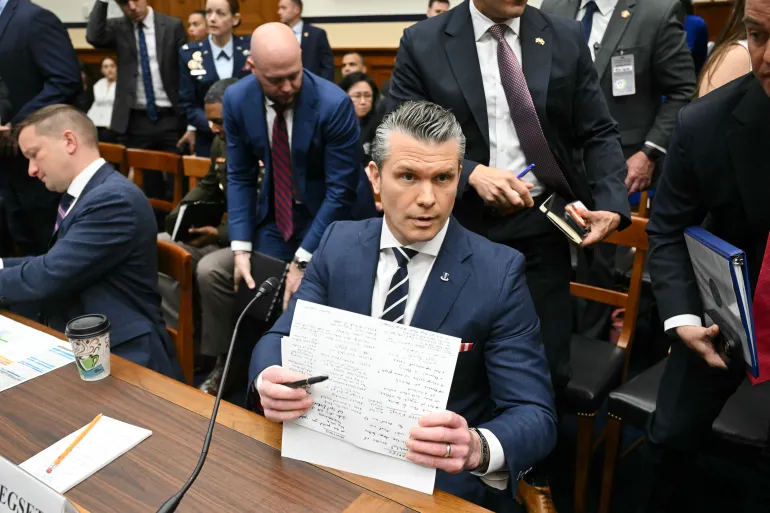
US Defense Secretary Pete Hegseth is facing renewed scrutiny over his leadership of the Pentagon, with criticism now coming from members of his own Republican Party.
Republican Senator Thom Tillis has called on President Donald Trump to replace Hegseth, accusing the defense secretary of creating a “leadership void” at the top of the US military. Tillis said he had never witnessed what he described as more inept management of US service members.
The latest criticism adds to a growing list of controversies that have surrounded Hegseth since he became Trump’s defense secretary.
Classified Information Controversy
One of the earliest major controversies of Hegseth’s tenure involved the handling of sensitive military information.
In March 2025, Hegseth was criticized after details about planned US military strikes against Yemen were shared in a messaging group that included a journalist and other people who were not supposed to have access to the information.
Hegseth described the incident as an inadvertent disclosure, while the episode raised questions about the handling of classified information at the highest levels of the Pentagon.
Pentagon Leadership Shake-Up
Hegseth’s management style has also generated controversy because of the number of senior military officials who have been removed, reassigned or have left their positions.
Critics have accused him of placing loyalty and political alignment ahead of institutional experience. Supporters, however, argue that Hegseth is attempting to overhaul a Pentagon bureaucracy that he believes has become resistant to change.
The continuing departures have contributed to concerns about stability within the military’s senior leadership.
Conflict With Army Leadership
Relations between Hegseth and senior Army officials have been particularly tense.
Army Secretary Dan Driscoll resigned after months of reported disagreements with Hegseth. Driscoll’s departure came after other senior Army leadership changes, including the removal of Army Chief of Staff Gen. Randy George.
Driscoll’s resignation has intensified concerns in Congress about the stability of civilian and military leadership at the Pentagon.
President Trump subsequently appointed Adam Telle as acting Army secretary, leaving the Army without a Senate-confirmed civilian secretary.
Iran War and Questions Over Military Strategy
Another major source of criticism has been Hegseth’s role in the ongoing US war with Iran.
The conflict has placed significant pressure on US forces, with lawmakers questioning the cost of the campaign and the Pentagon’s strategy.
Critics have argued that the military operation has lasted longer than originally expected and is placing additional strain on troops, equipment and resources.
Recent reports indicate that Hegseth has extended major US military deployments in the Middle East into 2027, despite President Trump’s public suggestions that the conflict could be nearing an end.
Concerns Over Military Readiness
The prolonged Middle East deployment has also raised questions about military readiness.
Large numbers of US troops and warships remain deployed across the region, increasing pressure on personnel and equipment. Reports have warned that extended deployments could reduce maintenance opportunities and limit the military’s flexibility to respond to other potential threats.
These concerns are particularly significant for the Pentagon as it attempts to balance operations in the Middle East with commitments elsewhere.
Dispute Over Military Culture
Hegseth has made changing military culture one of the central themes of his tenure.
He has promoted a philosophy centered on what he calls “maximum lethality” and has pursued major changes to Pentagon policies.
Supporters argue that the approach is intended to restore combat readiness and focus the military on its core mission.
Critics say some of the changes have created unnecessary disruption and have contributed to an increasingly politicized environment inside the Defense Department.
Controversial Canadian Social Media Post
Hegseth also faced criticism in September 2026 after the Pentagon published a controversial social media post concerning a Canadian cadet program.
The post generated backlash in Canada and prompted questions about the tone of US relations with one of Washington’s closest allies. The Pentagon defended the post, saying that it spoke for itself.
The episode was another example of Hegseth’s unconventional approach to public communication.
Testosterone Screening Controversy
The Pentagon also recently faced questions over new health guidance for US troops.
The department temporarily withdrew clinical guidance that would have introduced mandatory testosterone-deficiency screening for service members aged 30 and older. The guidance and an accompanying statement were removed from the Pentagon website shortly after being published.
The episode added to broader questions about the way new Pentagon policies are developed and communicated.
Calls for Hegseth’s Removal
The latest and potentially most politically significant development came from Senator Thom Tillis, who publicly called on Trump to remove Hegseth.
Tillis accused the defense secretary of “inept mismanagement” and argued that the Pentagon was suffering from a leadership crisis.
The criticism is notable because Tillis is a Republican and because Hegseth has continued to receive strong backing from President Trump.
The White House has defended Hegseth and pointed to the administration’s military operations and readiness agenda as evidence that he remains effective.
A Pentagon Under Pressure
The controversies surrounding Hegseth have emerged during one of the most challenging periods for the US military in years.
The Pentagon is dealing with the ongoing Iran conflict, leadership turnover, military modernization, questions over force readiness and political battles over the direction of the armed forces.
For Hegseth, the challenge is now not simply defending individual policies but demonstrating that the Pentagon remains capable of maintaining stable and effective military leadership.
What Happens Next?
The immediate question is whether Trump’s support for Hegseth will withstand increasing pressure from congressional Republicans and concerns within the military establishment.
The resignation of senior officials and calls for Hegseth’s removal have made Pentagon leadership a growing political issue.
Whether the secretary remains in his position or faces a cabinet shake-up could have major consequences for US military policy and the administration’s approach to the Iran war.
Bottom Line
Pete Hegseth’s tenure as Pentagon chief has been marked by leadership disputes, senior personnel departures, classified-information controversy, military strategy debates and clashes with lawmakers.
The latest call from Republican Senator Thom Tillis for Hegseth’s removal represents a significant escalation in criticism.
With the Iran war continuing and senior military leadership facing major changes, Hegseth’s ability to maintain confidence inside the Pentagon and on Capitol Hill is likely to remain under intense scrutiny.


About The Author